Masked Owl
Tyto novaehollandiae
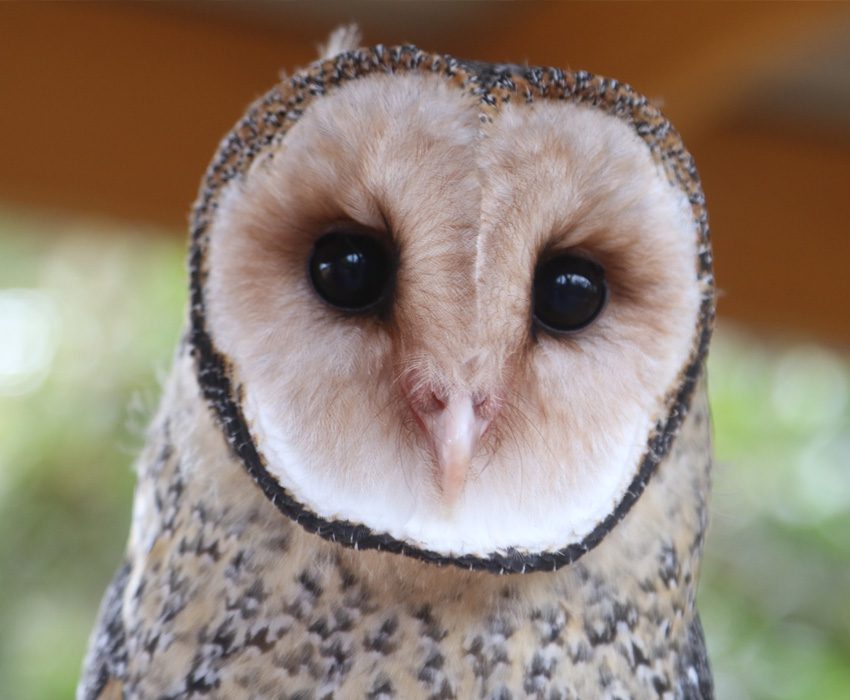
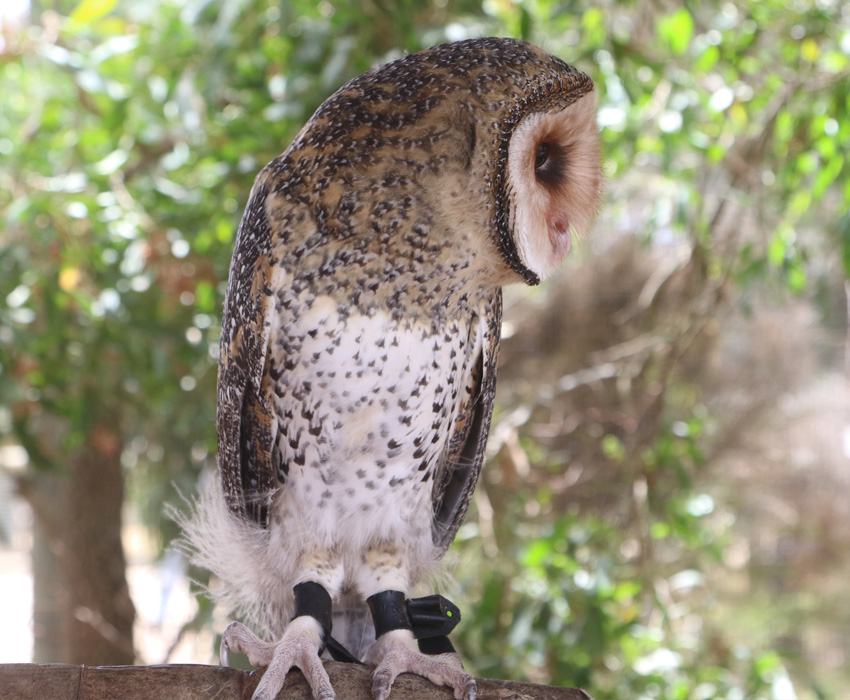
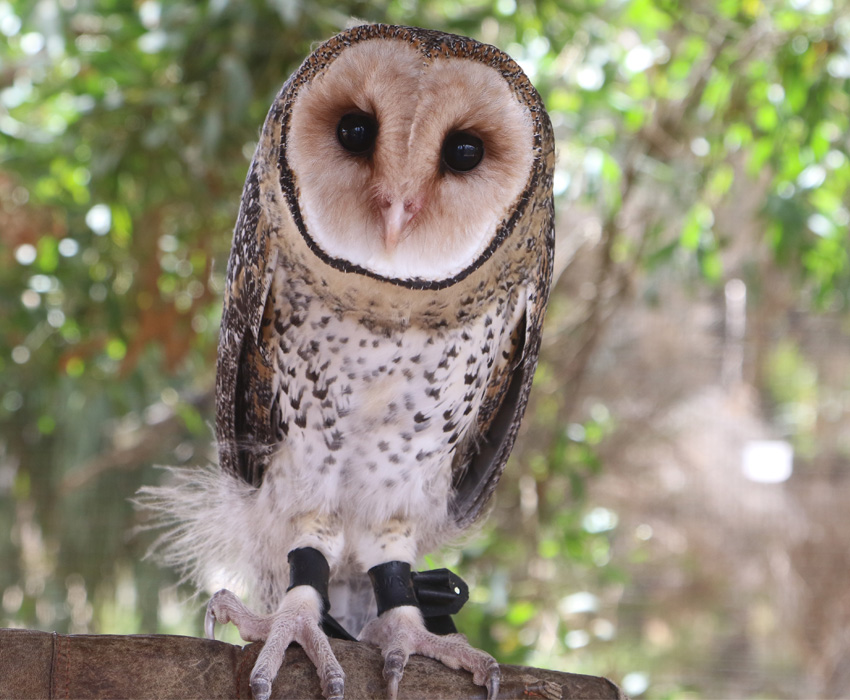
The Masked Owl comes in three plumage types – pale, intermediate, and dark – but all share a similar pattern. Their facial disc ranges from chestnut to white, edged with darker markings around the bill and eyes. The upperparts are spotted grey and white, while the underparts are rufous to white with dark speckles.
Females are larger and usually darker than males, and young owls are white to cream before developing adult markings. Tasmanian Masked Owls are bigger than their mainland counterparts. As the largest Tyto owl and second-largest nocturnal bird in Australia, they are impressive to see up close.
WHAT THEY EAT
Masked Owls feed mainly on small mammals, such as rodents, rabbits and bandicoots. Other prey animals include possums, reptiles, birds and insects, with hunting taking place in the early hours of night. The birds sit on low perches listening for prey which, once detected, is taken from the ground or from the tree branches
BREEDING
Masked Owls breed when conditions are favourable and food items are plentiful. The nest is a bare chamber located deep in a tree hollow, which is lined with soil, sand or soft wood mulch. The eggs are incubated solely by the female, while the male provides the food. The female also tears up the food for the chicks. The young birds remain in the vicinity of the nest and are fed by the parent birds for a further month after fledging.