BUILD A POSSUM DREY
Give ringtail possums a cozy, weatherproof place to snooze and raise their young.
You’ll need:
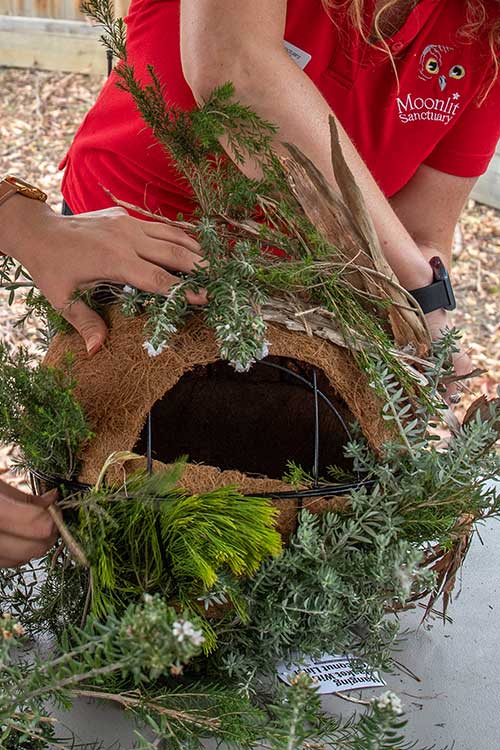
- Two wire hanging baskets
- Two coconut fibre basket liners, dried leaves, shredded paper, or hay
- Cable ties or wire for attaching the baskets
How to build
- Line your basket with fibre and fill with soft nesting materials.
- Secure the drey high in a sheltered tree fork or dense shrub.
- Make sure it’s stable and out of reach of pets.
Tips
- Avoid disturbing active dreys once they are in use.
- Place more than one to reduce territorial disputes.
- Position them near flowering or fruiting native plants for easy food access.
- Don’t make the opening too large or the ringtail possums won’t feel safe and secure.
- When you hang the possum drey make sure it is not in an exposed area and is hidden in the tree canopy
- Don’t put it in an isolated tree, as the possums will have to come down to find food and to move around.
BUILD A BUTTERFLY PUDDLER
Give butterflies a safe place to sip essential minerals and water in your garden.
You’ll need:
- A shallow dish or saucer
- Sand or fine gravel
- Water
- Small rocks or pebbles for perches
How to build
- Fill the dish with a layer of sand or fine gravel.
- Add water until the sand is damp but not flooded.
- Place a few small rocks or pebbles so butterflies have a place to land
- Position ina sunny, sheltered spot near native flowers.
Tips
- Keep the puddler damp, topping up water daily in hot weather.
- Avoid deep water – butterflies can’t swim!
- Surround with nectar-rich native plants for a butterfly buffet.
- Don’t make the opening too large or the ringtail possums won’t feel safe and secure.
Invite nature’s delicate garden guests – your puddler will be the hottest spot in town!
BUILD A FROG HOTEL
Give local frogs a cool, safe place to rest and feed with this simple backyard project!
You’ll need
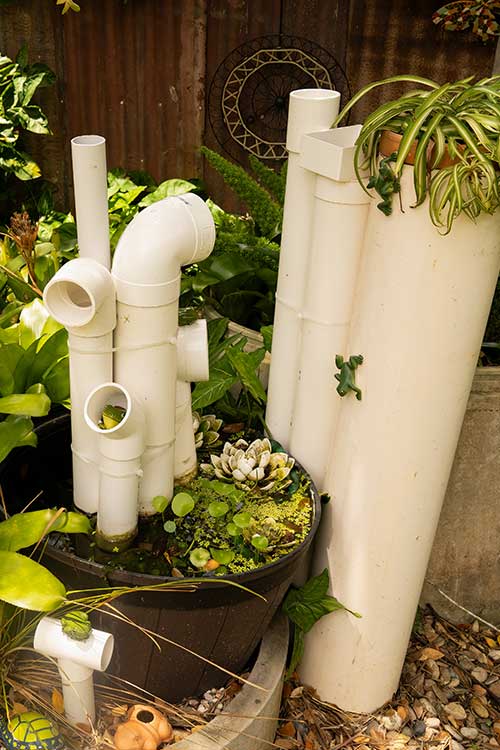
- PVC pipes (3–4 widths)
- Bowl or tub that holds water
- Gravel or pebbles
Optional: native water plants, decorative rocks, solar light
How to build
- Cut PVC pipes to different lengths and smooth the edges.
- Arrange pipes upright in your bowl or tub.
- Fill around them with gravel or pebbles to hold in place.
- Add plants or rocks for shade and decoration.
- Fill with dechlorinated water — your frog hotel is open!
Tips
- Top up with water every few days.
- Keep the water level just below the gravel to deter mosquitoes.
- Add a solar light nearby to attract insects for frogs to feed on.
- Choose frog-friendly natives like common rush, bog primrose, native violet or frogsmouth.
Help your garden come alive — one hop at a time!
BUILD A BEE HOTEL
Give solitary native bees a safe nesting spot and help pollinate your garden!
You’ll need
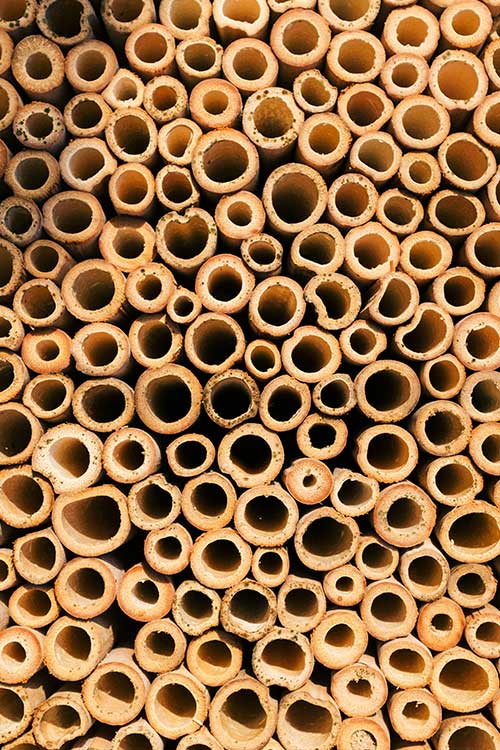
- Hollow bamboo stems or paper straws
- Timber block with drilled holes (4–10 mm wide)
- Rope or wire for hanging
- Shelter from rain
How to build
- Bundle bamboo or drill holes into timber.
- Ensure holes are smooth and closed at the back.
- Mount your hotel in a sunny, sheltered spot about chest height.
- Keep it dry — bees don’t enjoy soggy rooms!
Tips
- Avoid treated or painted wood.
- Replace materials every 1–2 years to prevent parasites.
- Plant nectar-rich native flowers nearby.
Let the buzz begin!
BUILD A NEST BOX FOR MICRO BATS
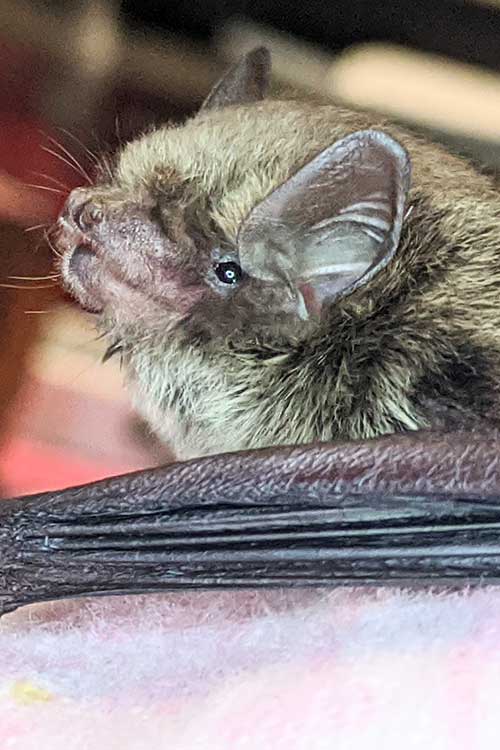
Give microbats a safe, warm roost in your backyard with this simple DIY project! Nest boxes are also available for purchase from many online businesses.
You’ll need
- Backboard (350 mm × 150 mm)
- Baseboard (140 mm × 150 mm)
- Front board (200 mm × 150 mm)
- Top/lid (200 mm × 150 mm)
- 2 Side boards (200 mm × 150 mm)
- 2 Timber spacers (150 mm)
- Self-tapping wood screws
- Small piece of shade cloth (150 mm × 200 mm)
- Staple gun & staples
- 2 Eye bolts & washing line wire
- Natural waterproofing oil
Tip: All pieces can be cut from a single plank of timber (150 mm × 1340 mm × 30 mm). Make sure to use untreated wood.
How to build
- Mount the timber spacers to the backboard.
- Attach the side boards with screws.
- Line the inside with shade cloth, stapling securely.
- Screw on the baseboard, leaving a 15–20 mm gap at the back for bats to enter.
- Attach the front board.
- Fix the lid with a slight overhang to keep the box dry and draught-free.
- Install eye bolts and thread through washing line wire for hanging.
- Paint or coat with natural waterproofing oil.
- Hang from a tree or mount vertically, 4-6m above the ground, in a sunny but sheltered spot with a clear flight path.
Tips & safety
- Patience is key — don’t disturb the box, or bats may avoid it.
- Never handle bats — they can carry diseases and should only be observed from a distance.
Create a quiet, safe haven for these amazing night-time pollinators and insect controllers — and enjoy watching your backyard come alive after dark!
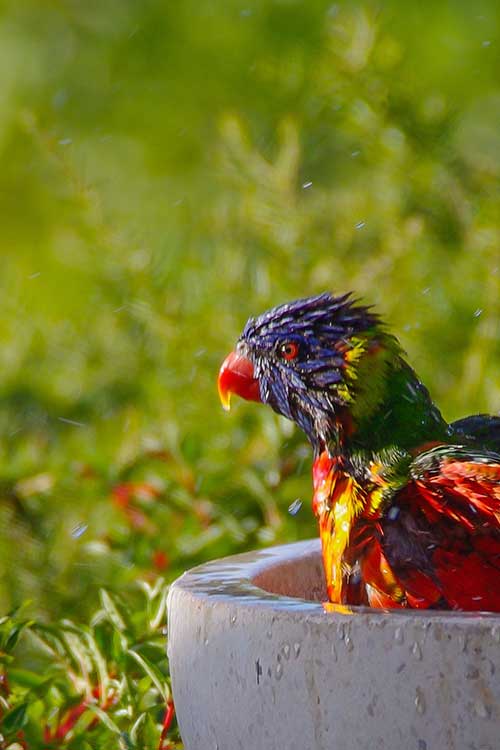
Make a Bird Bath
A simple bird bath can be a life-saver during dry spells.
You’ll need
- Shallow bowl or dish
- Rocks or pebbles for perching
- Stand or safe elevated spot
How to build
- Place your bath in a shaded, open area away from hiding predators.
- Add a few stones for footing.
- Refill with fresh water daily.
Tips
- Keep it clean — scrub weekly with a brush and rinse well.
- Avoid deep bowls — shallow water is safest.
- Position near shrubs for quick escape cover.
Every sip helps!





Moonlit Sanctuary acknowledges the Bunurong / Boon Wurrung people of the Kulin Nation as the Traditional Owners of the land on which we operate and pay our respects to their Elders past, present and future.