Eastern Quoll
Dasyurus viverrinus
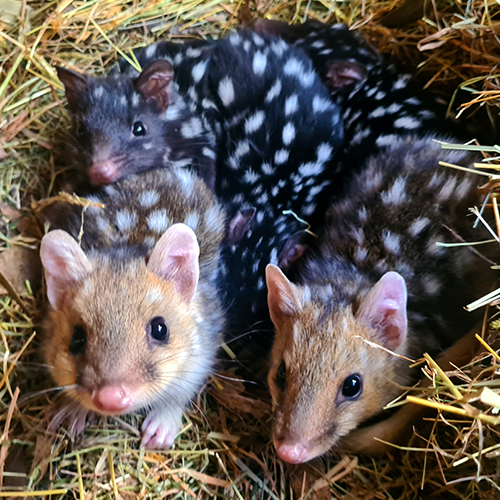
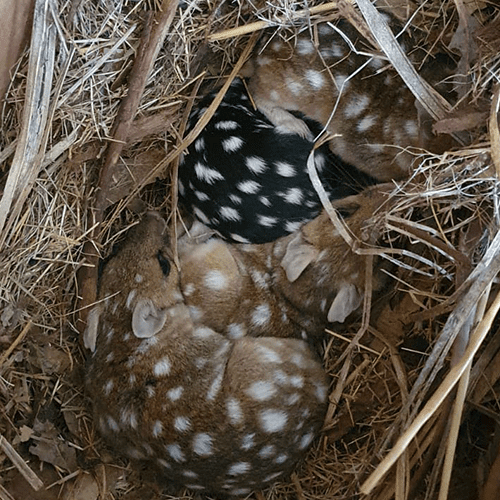
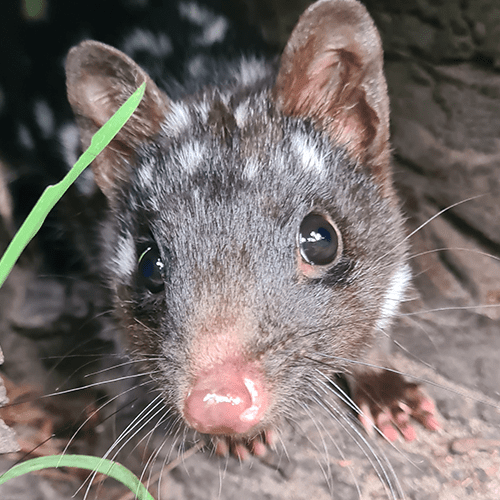
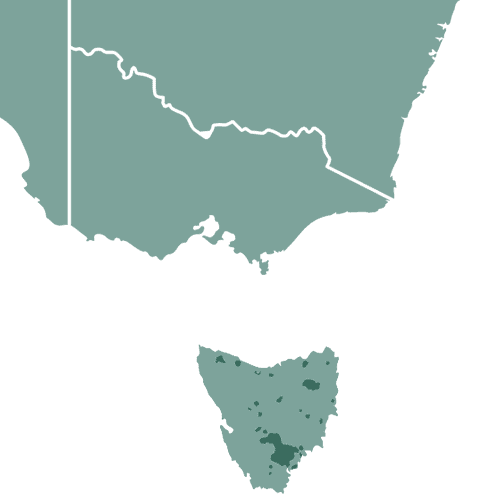
Once common across most of south-eastern Australia, Eastern Quolls were declared extinct on the mainland in 1963, surviving only in the wild in Tasmania. These small, cat-sized marsupials are curious, nocturnal hunters with a coat of soft fawn or black fur sprinkled in white spots. Their spot location is unique to each individual, so no-one looks the same in a population!
Habitat
Eastern Quolls are found in the dry-moderate rainfall areas of the eastern part of Tasmania, in open grasslands, farmland, woodlands, dry forests, coastal scrub and alpine heathland. They are largely solitary although not territorial, and individual’s home ranges may overlap.
Diet
Eastern Quolls are skilled hunters, feeding on insects, small mammals, birds, reptiles, and carrion. They are also accomplished climbers and diggers, moving easily between ground and low trees in search of food.
Breeding
Eastern Quolls breed once a year, usually in late autumn. After a short pregnancy of around three weeks, females give birth to tiny, underdeveloped joeys that crawl into the pouch to continue growing. Mum can have up to six joeys in the pouch at one time.
Once they outgrow the pouch, the young ride on mum’s back until they’re ready to head out on their own.
The lifespan is about 3-5 years in the wild.