Fat-tailed Dunnart
Sminthopsis crassicaudata crassicaudata
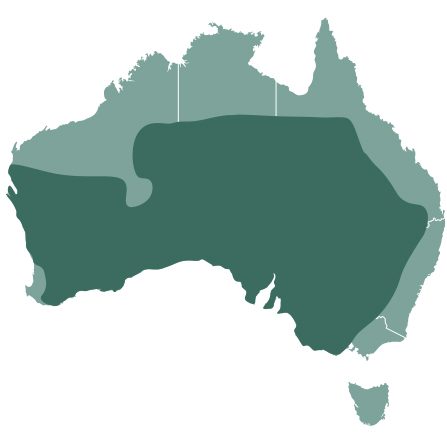
The Fat-tailed Dunnart (Sminthopsis crassicaudata) is one of Australia’s smallest carnivorous marsupials. Found across much of southern and central Australia, these tiny mammals inhabit dry, open environments such as grasslands, shrublands and sandy plains. They are well adapted to Australia’s often harsh conditions, surviving in areas where food and water can be scarce.
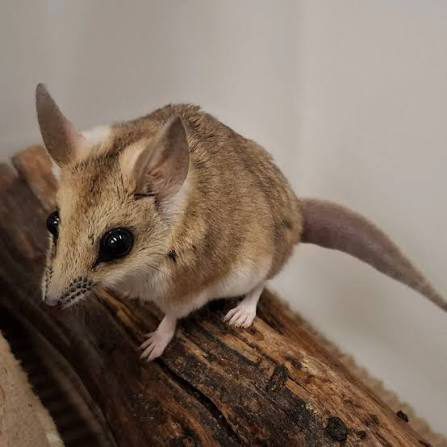
Measuring just 60–90 mm from head to body and weighing only 10–20 grams, Fat-tailed Dunnarts are remarkably small. They have soft, grey-brown fur, large rounded ears, dark eyes and a pointed snout. Their most distinctive feature is their thick, fat-storing tail, which acts as an energy reserve when food is harder to find.
As nocturnal animals, they spend much of the day sheltering in burrows, natural crevices or grass nests, emerging after dark to hunt. Despite their tiny size, they are active and capable predators, using their keen senses and quick movements to catch insects and other small prey. When temperatures drop or food becomes scarce, they can enter a state of torpor, lowering their body temperature and metabolism to conserve energy.
Fat-tailed Dunnarts belong to the Dasyuridae family, making them relatives of Tasmanian Devils, quolls and the extinct Tasmanian Tiger (Thylacine). Despite their small size, they share the same carnivorous ancestry as some of Australia’s best-known marsupial predators.
WHAT THEY EAT
Fat-tailed Dunnarts are insect hunters, feeding mainly on beetles, spiders, moths, crickets and other small invertebrates. They hunt at night, relying on their keen senses and quick movements to catch prey. They can consume a large amount of food relative to their body size, storing excess energy as fat in their distinctive tail.
HABITAT
Fat-tailed Dunnarts are found across much of southern and central Australia, inhabiting dry grasslands, open woodlands, shrublands and sandy plains. They shelter in burrows, rock crevices and abandoned nests, often using grass and other vegetation to create a cosy daytime retreat.
BREEDING
Breeding generally occurs during the warmer months, although it can vary depending on food availability and environmental conditions. Females give birth to tiny, underdeveloped young after a short pregnancy. The young attach to their mother’s teats and continue developing in her pouch before emerging and eventually becoming independent.
Females can have several litters in a favourable breeding season, helping these small marsupials take advantage of periods when food is plentiful.