Olive Python
Liasis olivaceus
Reaching a size in excess of 6 metres, olive pythons are among the largest of Australia’s snakes.
Its exceptionally high scale count gives it a smoother look than most snakes. Colouring varies from olive and greenish-brown to reddish-brown or even off-white. It features pale lips delicately speckled with grey or brown, and a lighter, whitish belly.
They are mainly nocturnal and during the day will shelter in rock crevices and hollows. They are great swimmers and will hunt in water courses.
Habitat
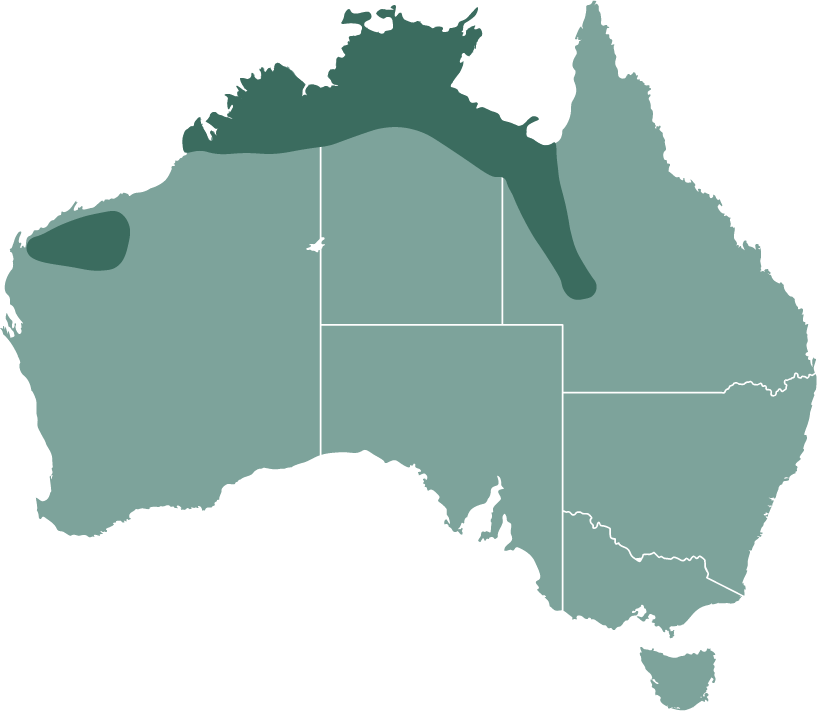
They are found across the north of Western Australia, the Northern Territory and just into Queensland. Living in the savannah and bushlands they favour rocky gorges and watercourses, taking shelter during the hottest parts of the day in rock crevices and hollows reserving most activity to the nights.
Diet
Olive pythons are carnivores. They prey on birds, mammals and reptiles. Adult pythons can consume mammals as large as rock wallabies. The olive python kills its prey by constriction and is not venomous. These ambush predators will lay in wait and even stalk prey before striking and taking down birds, reptiles and mammals including large wallabies that get within range. A meal of this size could satisfy them for 6 months.
Breeding
Females lay between 12 and 40 eggs toward the end of spring. The clutch incubates for around 50 days before the hatchlings appear. After cutting through their eggshells, the juveniles often linger with just their heads poking out for a few days before emerging completely.